Capa/Cover
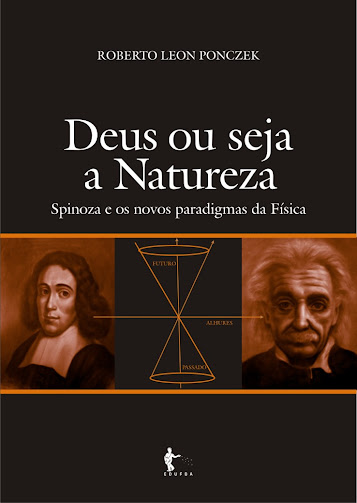
Imagens e textos unindo Spinoza a Einstein/ Images and texts linking Spinoza and Einstein

A aura de Spinoza paira sobre Einstein

Pequena casa em Rijnsburg

Livro de Registro da casa de Spinoza (Visita de Einstein em 1920)
A CRITICAL REVIEW OF THE TTP TO UNDERSTAND WHY WAS CONSIDERATED A BOOK "FORGED IN HELL".
A REVIEW OF BARUCH SPINOZA'S THEOLOGICAL-POLITICAL TREATISE TO UNDERSTAND WHY WAS CONSIDERED A BOOK “FORGED IN HELL”?
by
Roberto Leon Ponczek
Abstract
This article presents a critical review of Baruch Spinoza’s Theological-Political Treatise (Tractatus Theologico-Politicus), examining its revolutionary ideas and explaining why they were regarded as impious and subversive in his own time and for approximately one hundred and fifty years thereafter. Only from the nineteenth century onward did Spinoza come to be recognized as one of the principal precursors of the Enlightenment and modern secularism, particularly through the reinterpretations advanced by Hegel and, above all, Nietzsche. Nevertheless, some of his propositions remain controversial among conservative theologians and religious thinkers. The Theological-Political Treatise is here interpreted as one of the foundational texts of intellectual modernity, inaugurating a new relationship between religion, reason, and political authority.
Keywords: Baruch Spinoza; Theological-Political Treatise; Enlightenment; secularism; biblical criticism; freedom of thought.
1. General Aspects of the Work
In the Theological-Political Treatise, Spinoza develops an innovative critique of the traditional reading of the Bible, proposing that sacred texts should be studied historically by taking into account their authors, intended audiences, circumstances of composition, and linguistic particularities. This approach makes the Treatise one of the precursors of modern biblical criticism. More broadly, it anticipates the idea that religions should be understood not primarily as prophetic epiphanies but as historical narratives shaped by particular social and political conditions.
Spinoza argues that the prophets did not possess superior philosophical knowledge but rather an extraordinarily powerful imagination, which enabled them to convey moral teachings appropriate to the people of their time.
Consequently, religious truth should not be confused with scientific or philosophical truth. The purpose of Scripture is neither to teach cosmology nor metaphysics nor natural history, but rather to promote justice, charity, and ethical obedience.
One of the most revolutionary aspects of the work is its critique of the power exercised by theologians and religious authorities. Spinoza maintains that numerous wars, persecutions, and social conflicts have arisen from attempts to transform particular religious interpretations into universally binding truths. By denouncing superstition and fanaticism, he seeks to liberate religion from the dogmatic disputes that ultimately corrupt it.
At the political level, Spinoza argues that the State must exercise sovereign authority over public affairs, thereby preventing religious institutions from competing for political power. During the Middle Ages, for example, popes authority often rivaled and even surpassed the power of kings. Yet sovereign authority should not degenerate into tyranny. On the contrary, a rational State guarantees its citizens the freedom to think, to express their opinions, and to pursue truth. According to Spinoza, no one can entirely renounce the right to think independently, since this right belongs to human nature itself.
The Treatise anticipates several principles that would later become associated with the Enlightenment: religious tolerance, freedom of expression, the secular character of the State, and the primacy of critical reason. Its influence may be discerned in thinkers such as John Locke and, indirectly, in numerous eighteenth-century authors.
From a literary perspective, the text is distinguished by philosophical rigor, clarity, and argumentative force. It confronts established beliefs with arguments that continue to surprise contemporary readers because of their remarkable modernity. The Theological-Political Treatise remains relevant because it addresses questions that continue to shape modern societies: the boundaries between religion and politics, intellectual freedom, the role of rational criticism, and the dangers of fundamentalism.
In short, the Theological-Political Treatise is a foundational work of intellectual modernity. Its defense of freedom of thought and its critique of the absolutist pretensions of organized religion make it one of the most significant texts in the Western philosophical tradition. To read Spinoza today is to rediscover one of the most vigorous formulations of the idea that the pursuit of truth requires freedom and that no society can be genuinely free without guaranteeing its citizens the right to think and to dissent.
2. Context and Purpose of the Work
Spinoza wrote the Treatise in the Dutch Republic of the seventeenth century, one of the few places in Europe where a relative degree of freedom of expression existed. The book was published anonymously under a fictitious imprint because Spinoza knew that its arguments would prove explosive even within the relatively tolerant environment of the Netherlands, especially after the murder of the republican leaders De Witt brothers and the political ascendancy of the House of Orange and radical Calvinism.
The central thesis of the work may be summarized as follows: freedom of thought and philosophical inquiry are essential both to the peace of the State and to authentic religiosity.
3. Spinoza’s Revolutionary Concepts
a) Deus sive Natura
God is not a transcendent monarch seated above the clouds, judging, condemning, and intervening through miracles. Rather, God is Nature (Deus sive Natura): the single infinite substance possessing infinitely many attributes, of which human beings perceive only two - extension and thought. This conception therefore rejects the biblical notion of a personal God.
b) The Human Character of Scripture
The Bible was written by human beings at different historical moments and under specific political circumstances. Consequently, it contains errors, legends, and adaptations. Spinoza famously emphasizes the biblical passage in which Joshua commands the sun to stand still so that he may continue his battle against five enemy kings in daylight.
c) Critique of a complex dogmatic religion
Religious doctrines should be simple and reducible to a small number of principles, for an easy understanding by the simple people: God is omnipresent, observes all things, possesses authority over all beings, and grants salvation only to those who obey divine commands; God forgives the repentant and punishes transgressors. No official authorities are needed.
d) The Secularization of Political Authority
Neither priests nor theologians should govern the State. The sovereign may regulate public worship solely for the maintenance of public order, not because he enjoys any privileged access to God.
4. Why Was the Treatise Considered a “Damned” Book?
a) It Destroys the Monopoly of Official Interpretation
Both Christianity and Judaism have traditionally relied upon the idea that clergy and rabbinic authorities possess privileged authority to interpret the Word of God. Spinoza maintains that any person endowed with reason and sufficient knowledge of Hebrew may legitimately interpret Scripture. Such a position radically undermines institutional authority.
b) It Denies the Possibility of the Supernatural
For Spinoza, miracles do not exist. There are no miraculous crossings of seas, no divinely inflicted plagues upon Egypt, no miraculous healings, and no resurrection in the literal sense. Every event must admit of a rational explanation grounded in natural causes, even when such causes remain temporarily unknown.
c) It Rejects the Special Status of Prophets
Moses and Jesus possess no ontological status different from that of other wise figures, all were human. Moses is regarded just as an effective legislator who contributed decisively to the liberation and preservation of the Jewish people through desert. Jesus is admired for his persistent teaching of love of neighbor and for his unique capacity to communicate intellectually with God, “mind to mind.” Yet Spinoza denies Christ’s any miraculous powers.
For the monotheistic religions, this constituted one of the gravest conceivable heresies, for it effectively undermined their doctrinal foundations.
5. The Reduction of Religion to Ethics
If God desires only justice and charity, then doctrines such as the election of Israel as a uniquely chosen nation loses their theological privilege. All peoples and nations stand equally before God. This thesis also undoubtedly displeased the Beit Din, the tribunal of the Portuguese Jewish community of Amsterdam, which had already condemned Spinoza and pronounced the Cherem, (ban from the local community) against him even before the anonymous publication of the Treatise.
6. The Defense of the Secular State
Long before the expression “secular State” entered political vocabulary, Spinoza vigorously denied that the State should punish heresy or atheism. He rejected the widespread belief that heretics and atheists could not be good citizens and therefore represented a threat to social order.
Spinoza was excommunicated by the Talmud Torah, the Portuguese Synagogue of Amsterdam, in 1656, and the Theological-Political Treatise was condemned by the Catholic Church in 1679 and by Dutch Protestant authorities. Thus, both the philosopher and his work were rejected by virtually every religious establishment of their time and were almost unanimously regarded as heretical.
7. The Accusation of Atheism
Although Spinoza consistently declared himself a believer in God, his conception of an impersonal God, devoid of will and incapable of suspending the natural order, appeared to many of his contemporaries as little more than concealed atheism.
For nearly one hundred and fifty years, “Spinozism” functioned as a term of abuse. Even Enlightenment thinkers frequently avoided citing him publicly. Only in the nineteenth century did Hegel and Nietzsche contribute decisively to his rehabilitation and rediscovery.
8. Conclusion
The Theological-Political Treatise eventually became one of the manuals of critical modernity. It profoundly influenced the Enlightenment, modern biblical criticism, the separation between Church and State, and the emergence of secularism. It was therefore called a “book forged in hell” because it simultaneously challenged the possibility of miracles understood as suspensions of natural order, the authority of the clergy, and the union of religious faith with political power.
Spinoza did not seek to destroy religion. On the contrary, he regarded religion as useful for providing moral orientation to ordinary people, provided that it remained free from fanaticism. The difficulty, however, is that in the process of purifying religion, he rejected almost everything that religious institutions considered non-negotiable and introduced rational principles fundamentally at odds with their traditional doctrines.
I conclude with a question that accompanied me throughout my careful reading of the original text: Why does Spinoza criticize the Old Testament with such relentless severity, sparing almost none of its principal figures—with the notable exception of Solomon—while approaching the New Testament in a comparatively milder, and at times even remarkably sympathetic, manner, praising several of its protagonists like Paul and Jesus? I have my own hypotheses regarding this asymmetry; however, because they are exceedingly controversial, I leave the matter to a multidisciplinary studies made by historians and psychologists scholars.
References:
ISRAEL, Jonathan I. Radical Enlightenment. Oxford: Oxford University Press, 2001.
NADLER, Steven, Spinoza: A Life. Cambridge: Cambridge University Press, 1999.
_______________ Um livro forjado no inferno: o Tratado escandaloso de Espinosa e o nascimento da era secular. Tradução de Alexandre Morales. São Paulo: Três Estrelas, 2013.
PONCZEK, Roberto Leon. Deus ou seja a Natureza: Spinoza e os paradigmas da Física Moderna. 2. ed. Salvador: EDUFBA, 2013.
PREUS, J. Samuel. Spinoza and the Irrelevance of Biblical Authority. Cambridge: Cambridge University Press, 2001.
SPINOZA, Baruch. Tratado Teológico-Político. Tradução, introdução e notas de Diogo Pires Aurélio. São Paulo: Martins Fontes, 1ª Ed. 2003.
SPINOZA, Baruch. Tratado Teológico-Político. Tradução de J. Guinsburg e Newton Cunha. São Paulo: Perspectiva, 2014.
STRAUSS, Leo. Spinoza's Critique of Religion. Chicago: University of Chicago Press, 1965.


NEM MARX NEM PLATÃO
NEM MARX NEM PLATÃO
Numa manhã de domingo, eu estava deitado na rede na varanda da frente de minha casa em Jauá, praia no litoral norte de Salvador, meditando sobre uma das proposições da Ética de Spinoza que era uma peça importante para a conclusão da minha tese de doutorado: Ordo et conexio idearum idem est ac ordo et conexio rerum, pensava eu em voz alta: a ordem das idéias é a mesma que a ordem das coisas. Que bela proposição que selava de modo brilhante o isomorfismo e a equivalência entre o mundo da matéria e o mundo das idéias. Nem Platão com sua primazia do mundo das idéias sobre ao mundo imperfeito das coisas e nem Marx com a sua prevalência da matéria sobre as idéias, estavam certos. Spinoza brilhantemente estabelecia a equivalência entre o mundo material e o mundo das idéias.
Absorto nessa reflexão nem me dera conta que meu caseiro Alex havia chegado e me vendo deitado na rede com o pensamento distante exclamou:
- O Sr.hoje tirou o dia pra descansar, né?
- Não, Alex, agora estou trabalhando!
Alex sorriu sem entender bem e foi cuidar do jardim.
Alguns dias depois resolvi aparar, com nosso cortador elétrico, a grama que já estava alta. Nada me vinha à mente senão observar as finas folhas de grama sendo arremessadas a distância pelo aparelho girando em alta rotação. E deliciava-me ver atrás de mim um rastro de grama já aparada que contrastava com a grama alta à minha frente. Com a mente vazia de pensamentos fui novamente surpreendido por Alex que me disse com o intuito de me elogiar:
- O Professor resolveu hoje tirar o dia para trabalhar, né?!
- Não Alex, hoje resolvi descansar!
Cheguei à conclusão que a proposição de Spinoza havia sido demonstrada pelo meu caseiro Alex de forma empírica: “quando pensam que estou descansando estou trabalhando e quando pensam que estou trabalhando, descanso! Nem Marx, nem Platão estavam certos!
Numa manhã de domingo, eu estava deitado na rede na varanda da frente de minha casa em Jauá, praia no litoral norte de Salvador, meditando sobre uma das proposições da Ética de Spinoza que era uma peça importante para a conclusão da minha tese de doutorado: Ordo et conexio idearum idem est ac ordo et conexio rerum, pensava eu em voz alta: a ordem das idéias é a mesma que a ordem das coisas. Que bela proposição que selava de modo brilhante o isomorfismo e a equivalência entre o mundo da matéria e o mundo das idéias. Nem Platão com sua primazia do mundo das idéias sobre ao mundo imperfeito das coisas e nem Marx com a sua prevalência da matéria sobre as idéias, estavam certos. Spinoza brilhantemente estabelecia a equivalência entre o mundo material e o mundo das idéias.
Absorto nessa reflexão nem me dera conta que meu caseiro Alex havia chegado e me vendo deitado na rede com o pensamento distante exclamou:
- O Sr.hoje tirou o dia pra descansar, né?
- Não, Alex, agora estou trabalhando!
Alex sorriu sem entender bem e foi cuidar do jardim.
Alguns dias depois resolvi aparar, com nosso cortador elétrico, a grama que já estava alta. Nada me vinha à mente senão observar as finas folhas de grama sendo arremessadas a distância pelo aparelho girando em alta rotação. E deliciava-me ver atrás de mim um rastro de grama já aparada que contrastava com a grama alta à minha frente. Com a mente vazia de pensamentos fui novamente surpreendido por Alex que me disse com o intuito de me elogiar:
- O Professor resolveu hoje tirar o dia para trabalhar, né?!
- Não Alex, hoje resolvi descansar!
Cheguei à conclusão que a proposição de Spinoza havia sido demonstrada pelo meu caseiro Alex de forma empírica: “quando pensam que estou descansando estou trabalhando e quando pensam que estou trabalhando, descanso! Nem Marx, nem Platão estavam certos!
DEUS E O GEFILTE FISH
DEUS E O GEFILTE FISH
(Crônica memorial)
Minha mãe Sra. Wanda Goldblum Ponczek (que Deus guarde sua grande alma) era uma mulher bondosa e altruísta, sempre querendo o melhor para mim e de mim. No entanto, como boa yidishe mame[1] era sutilmente autoritária e manipuladora e quase sempre se esquecia de me perguntar o que era bom para mim. Num dia mais frio ou chuvoso, era capaz de me embrulhar todo num papel celofane para que eu não "pegasse um resfriado". Não admitia que eu andasse descalço em casa e profetizava:" você vai se resfriar ou ferir seus pés"- e o pior é que suas profecias sempre se concretizavam... Se eu me recusasse a comer ela mudava de tática e dramatizava fazendo-se de vítima: "preparei essa comida com tanto carinho, como você me faz sofrer". Sra. Wanda era o arquétipo da mãe judia de várias piadas judaicas:
A mãe italiana quando seu filho não come diz-lhe em tom agressivo: "Se voce não comer esse talharim, que fiz para você, eu te mato". Já a mãe judia quando seu filho não quer comer diz-lhe em tom de tragédia: se voce não comer esse gefilte fish[2] que fiz especialmente pra você, eu me mato!” Minha querida yidishe mame seguia exatamente esse padrão.
Quando seus argumentos de convencimento não surtiam o efeito desejado, e eu não a obedecia, ela apelava para o drama e a autocomiseração e quando estes também já não eram suficientes então ela guardava na manga da camisa seu derradeiro e terrível trunfo: “Se você não comer ou não fizer o que te peço (a mãe judia nunca diz eu te ordeno)... vinha então a terrível praga do Egito: “Deus vai te castigar!”
Essa ameaça tinha um efeito avassalador em mim. Eu acabava fazendo com relutância o que ela me "pedia", mas sempre com um terrível medo de Deus. Pensamentos cruéis me perseguiam:
“Afinal quem é esse tal de "Deus "panóptico que tudo vê e julga? Então Ele perceberá que estou fazendo a contragosto o que me foi "pedido" e poderá ainda assim me castigar! Então não só tenho que fazer o que mamãe me "pede" como ainda tenho que mostrar a Deus (que tudo observa) que estou fazendo com prazer tudo aquilo que não quero fazer! Então não só tenho que comer, mas ainda tenho que fingir que estou adorando comer o gefilte fish para que Deus não me castigue, mas Ele tudo percebe e também perceberá minha dissimulação. Estou condenado a grandes castigos!”
Muitos anos depois de minha querida yidische mame ter falecido, tornei-me um estudioso da obra de Baruch Spinoza, um judeu português exilado na Holanda e que me ensinou outro conceito de Deus, bem diferente daquele com o qual minha mãe me assustava: um Deus infinito que se confunde com a própria Natureza e suas leis. “Deus, ou seja, a Natureza, definia Spinoza. Deus seria imanente à natureza e suas supremas leis de transformação e movimento.
E este novo conceito de Deus interno e imanente ao universo e que todos os seus modos de existência (inclusive nós humanos) somos partes Dele, salvou-me da culpa de na infância não querer comer gefilte fish!
Se voce quando criança judia ou cristã ouvia coisas do tipo "Se voce continuar fazendo isso, Deus vai te castigar" (os cristãos aprenderam com os judeus a utilizar o nome de Deus para manipular ou incutir culpabilidade), não tenha medo de Deus, Ele não “quer” que você faça ou deixe de fazer algo. Vejam o porquê:
Pensamento spinozista.
1-Se Deus é infinito e possui infinitos atributos infinitos, porque haveria de ter vontade de que algo seja feito ou deixe de ser feito por você? Afinal Ele não controla, mas É todas as possibilidades da Natureza! Inclusive de voce fazer ou não fazer algo. Se voce fez ou não fez algo é porque seguiu a sua própria natureza de modo de ser de Deus – voce é uma parte Dele.
2- A vontade do corpo ou um desejo da mente é um modo de existir de seres finitos, que querem ou desejam algo que ainda não são ou não têm. Como Deus é absolutamente infinito Ele não quer nada nem deseja algo pra Si, caso contrário seria finito e incompleto como nós humanos.
Com esses conceitos em mente, hoje em dia não só perdi o medo de ser punido por Deus (apenas, como finito que sou, temo com reverência a sua infinita Infinitude) como passei a adorar comer gefilte fish e nas datas sagradas do Judaísmo como o Pessach[3] e o Rosh Há Shana[4], quando nos sentamos todos à mesa, disputo com minha irmã e meus filhos os bolinhos restantes. Minha querida yidische mame sra. Wanda Goldblum Ponczek certamente se orgulharia de mim!
[1] Yidische mame é literalmente a “mãezinha judia” na língua yidische que os judeus falavam no Leste europeu.
[2] Prato típico da culinária judaica consistindo em bolinhos de peixe cozido com uma fatia de cenoura em cima , temperados com raiz forte misturada com beterraba.
[3] Pessach é a Pascoa judaica quando os judeus rememoram a saída e libertação do Egito.
[4] Rosh Há Shana é o Ano Novo judaico que acontece no equinócio de primavera, aproximadamente no mês de setembro de nosso calendário.
DEUS JOGA DADOS OU
XADREZ COM OS HOMENS?
Spinoza nos diz:
1ª. - Uma coisa que é determinada por Deus a qualquer ação não
pode tornar-se a si própria indeterminada.
2ª. - Na natureza nada existe de contingente, antes, tudo é
determinado pela necessidade da natureza divina a existir e a agir de modo
certo.
3ª. - As coisas não poderiam ter sido produzidas por Deus de
maneira diversa e noutra ordem do que têm.
4ª. - É da natureza da razão considerar as coisas necessárias e
não contingentes, no entanto, imaginamos as coisas como contingentes somente em
razão da insuficiência do nosso conhecimento.
Em linguagem popular
essas 4 proposições podem ser resumidas com o dito popular: “nada ocorre por
acaso, tudo tem uma razão (causa) de ser. Se alguma coisa nos parece aleatória
é tão somente porque não conhecemos as causas que a produziram.
Einstein responde:
“Parece difícil observar as cartas de Deus. Mas sequer por um
instante posso acreditar que Ele joga dados".
O que também pode ser
entendido de forma muito simples: nada na natureza ocorre por acaso como num
lance de dados. Pelo contrário, se soubermos com detalhes as causas que antecedem
um acontecimento, poderemos prever com precisão a ocorrência desse fenômeno.
Para Spinoza e Einstein existe
na Natureza uma sólida cadeia de causas e efeitos que
se sucedem no tempo. O conhecimento correto é assim trilhar essa cadeia fazendo
previsões do que ocorrerá a partir do que ocorreu. O presente é conseqüência da
história, assim como o futuro será conseqüência do presente.
Já na interpretação dominante da Teoria Quântica não se pode saber
simultaneamente a posição e a velocidade de um corpo. Assim se meço a posição
perturbo sua velocidade a tal ponto que não posso saber aonde o corpo se
deslocara depois da medida. E reciprocamente se meço a velocidade com precisão
sua posição ficará total ou parcialmente desconhecida. Este é a famoso
principio de indeterminação ou incerteza de Heisenberg, verdadeiro axioma da
Teoria Quântica. Não podemos saber ao certo se a cadeira que vemos a nossa
frente está de fato ali. O simples fato de
observá-la faz com que ela saia de lá com paradeiro desconhecido, só nos
restando atribuir probabilidades de onde poderá estar!
Portanto, ao contrário de Spinoza e Einstein os quânticos afirmam
que não se pode ter um conhecimento
completo do estado presente de um corpo, pois para saber para onde este corpo está precisamos interagir com ele de forma que
o perturbaremos de forma irreversível. Só poderemos atribuir probabilidades
onde o corpo pode (ou não) estar!
Einstein e Spinoza acham que Deus não era maldoso, a ponto de
fazer os objetos fugir ao se tentar localizá-los e não se poder saber onde
estão e, ao mesmo tempo, aonde irão. Ele não joga dados, fazendo o mundo se
transformar num cassino de apostas. Einstein então desafia-O para uma partida
de xadrez cósmico, tentando descobrir algumas de Suas regras, em silêncio,
mesmo sabendo que vai perder ou, na melhor das hipóteses, empatar o jogo.
Lembre-se que Deus se contrai para criar o mundo e O vemos através de várias
cortinas ou atributos que filtram a Sua infinita luz! Certa vez Einstein escreveu
em uma carta ao físico americano David Bohm: “Se Deus criou o mundo, sua
principal preocupação certamente não era facilitar o entendimento para nós”.
Einstein acreditava, pois na possibilidade de conhecer, pelo menos em parte, as
regras que Deus criou para esse grande tabuleiro de xadrez que é o universo.
A interpretação da escola de Copenhague ao qual Heisenberg e Bohr
são os principais representantes parece mais próxima de uma filosofia do
sujeito, de cunho pós-metafísico (neo-kantiana), na qual a observação e a
descrição humanas desempenham um papel preponderante. A citação abaixo parece
sinalizar para esta aproximação.
Heisenberg nos diz:
“Na ciência, o objeto da investigação não é mais a natureza em si,
mas a natureza submetida à interrogação dos homens (...) na mecânica quântica
era necessário encontrar fórmulas matemáticas que expressassem, não a natureza,
mas sim o seu conhecimento (...) A incidência do método modifica o seu objeto e
o transforma até o ponto em que o método não pode mais se distinguir do
objeto”.
Como afirmou Protágoras, o homem é a medida de todas as coisas! Para Heisenberg e os quânticos, o mundo nada mais é que observação humana. E esta perturba de forma irreversível os objetos lançando-os
num campo de probabilidades. Não vemos o mundo nem a natureza como ela é, mas
apenas como resultado de nossa ação de observá-la e nossa ação perturba de tal
modo os objetos observados que estes se tornam indeterminados no espaço. A
Teoria Quântica cria assim um sujeito que é um monstro grego de duas
cabeças. A primeira delas é a do Homem Vitruviano de da Vinci, centro do
universo, que resgata sua posição central! Mas a segunda cabeça é a de uma
serpente que se devora pelo rabo, pois à medida que homem observa o mundo
destrói sua previsibilidade, introduzindo-lhe perturbações que o tornam
imprevisível. Para eles, a ciência é a descrição que os homens fazem do mundo e
não o descobrimento de um mundo construído com regras divinas!
Desta forma, Heisenberg, Bohr e os quânticos jogam dados com Deus
porque alegam jamais poderem ver o
tabuleiro, nem suas peças, por completo, mas apenas uma parte que aparenta ser
contingente e aleatória. A natureza é como uma mulher de dois véus, jamais se
deixando ver por completo. Ao se descobrir o véu da posição, a velocidade fica
completamente coberta pelo véu da incerteza. Se souber onde estás não saberei
aonde vais... és como um vagalume piscando na noite escura: vejo uma piscadela
ali, mas não sei onde será a próxima. E
se souber aonde vais, não saberei onde estás: és um raio de luz, vejo sua
direção e sentido, mas não sei onde está a luz. Não posso saber mais do que
isso: ou vejo vagalumes piscando a esmo na noite escura ou vejo feixes luminosos sem posição
definida.
HOMEM PARTE DA
HUMANIDADE OU MODO DE SER DA NATUREZA?
O pensamento científico desde o século XX encontra se, na verdade,
irremediavelmente dividido entre essas duas escolas. De um lado, o realismo spinoziano-
einsteiniano e, de outro, a irredutível indeterminação proposta pelos físicos
quânticos da Escola de Copenhague, liderados por Bohr, Heisenberg e Born,
dentre outros. Para Einstein, herdeiro da tradição realista, todo fato tem uma
causa que o antecede e o determina necessariamente, seja ela oculta ou não.
Nada pode ser diferente do que realmente é, e nada ocorre acidentalmente ou de
forma contingente. Somente a ocultação de uma ou mais causas se nos apresenta
na forma de contingências, como reza a quarta proposição de Spinoza acima
citada. O acaso é fruto apenas de nossa ignorância acerca das causas e não uma
condição ontológica e irredutível da natureza. Já para os últimos,
provavelmente influenciados por uma visão ora neo-empirista ora pragmatista,—
quem poderá determinar ao certo de onde vêm as influências do pensamento? — o
acaso e a contingência seriam essenciais a todo processo de conhecimento e uma
coisa pode ser e não ser, ou ocorrer ou não, de forma imprevisível ou
dependendo de como é percebida.
Contrariando as quatro proposições da Ética, acima expostas, nada
podemos afirmar ou prever com certeza, e assim uma causa pode desencadear um
efeito apenas provável, e, reciprocamente, um efeito pode ter uma causa apenas
provável. Aliás, nada garante que haja um processo de produção ou gênese de
fatos.
Para Einstein, essas idéias de contingência do universo, soavam
como um perigoso conformismo com o desconhecimento e a magia. De fato, toda
mágica consiste na ocultação proposital de uma ou mais causas que a produzem,
ao se descobri-las cessa a magia e seus efeitos ilusórios. Assim, para ele, se
um coelho foi tirado de uma cartola, ele já estava lá, oculto num fundo falso.
Já para Bohr, o coelho é o colapso de uma realidade múltipla, ou a atualização
de uma existência em potência na qual estão superpostos estados “coelhos” e
“pombas”, e somente depois de consumado o ato de observação, surgem coelhos ou
pombas, a depender do tipo de cartola utilizada... Ora, por trás das concepções
antagônicas de Einstein e Bohr, ocultam-se visões culturais francamente
distintas.
Se Einstein é um herdeiro do spinozismo realista do séc. XVII,
onde há uma ordem, imanente à natureza, que segue seu curso independentemente
da vontade e das representações humanas, Bohr e Heisenberg, e seus seguidores,
parecem preferir trilhar por um instrumentalismo pós-metafísico, devolvendo ao
homem o papel de protagonista ontologicamente central do processo de aquisição
do conhecimento. Resultam daí o acaso e a contingência como conseqüências desse
processo onde o homem é sujeito de seu livre-arbítrio, tendo o poder da escolha
final, pois, a depender de como constrói seu experimento, seu objeto
atualizar-se-á de formas distintas, ocultando sempre alguns aspectos da
realidade física. Se em Einstein, via Spinoza, o homem é apenas um elo da
cadeia substancial infinita, em Bohr ele é o sujeito central do conhecimento,
ainda que não possa determinar, com absoluta certeza, o que irá observar. A
comunidade científica parece ter aderido às idéias de indeterminação, à não
divisibilidade de um todo em partes interagentes e a um crescente pragmatismo
em que as teorias científicas nada mais devem ser do que descrições
convenientes do mundo visto como mera representação humana. Ao passo que os
realistas preferem perceber o homem como uma minúscula porção de um universo
regido por leis invariantes e imutáveis de causalidade local. Dito isto de
outra forma, enquanto Einstein prefere buscar a natureza que vige em sua
realidade soberana nas próprias coisas, independentemente da observação humana;
Bohr e os quânticos preferem ver o homem como o mais eloqüente intérprete da
natureza que se desdobra frente ao seu olhar, como convém ao eloqüente sujeito
pós kantiano.
Deixo ao leitor a iniciativa de exercitar seu livre arbítrio — se
bem que para Spinoza e Einstein também este último é uma ilusão — com o intuito
de decidir entre visões de mundo tão radicalmente distintas e irredutíveis. Vocês
preferem jogar xadrez com Deus, tentando entender suas regras ou esperar que
Ele jogue dados, decretando seus destinos ao acaso?

CONVERSATIONS WITH SPINOZA
After a long flight from Rio de Janeiro to Amsterdam I spent the night in a student hostel on the edge of the great canal, where I rented a tiny room, which barely had a bed and a chair, even smaller than Van Gogh painted; the window was a ship hatch that only opened a few inches outward, overlooking an inner courtyard where young people played video games.
The following day, in the morning, already redone from the long flight, but still confused about the time zones, after crossing the canal separating the Noord neighborhood from the rest of Amsterdam by ferry, I walked to the train station and embarked for a journey to Leyden passing through the cultivated low plains of Holland, from the window I saw its famous sunflowers fields that follow the trajectory of the sun, which still glowed even though it was late autumn. I went down to the station in the famous city of Leyden, where the electric capacitor was discovered through an artifact called the “Leyden bottle”, accidentally invented in 1746 by a certain Pieter van Musschebroek, a professor at Leyden University, who stored enough electricity to cause strong electric discharges. From Leyden I boarded a bus that would take me to the village of Rjnsburg, crossing the beautiful university where the bottle was discovered, and about half an hour later I arrived in Rynsburg, asking a nice young Dutchman where Spinoza Huis was, and he informed me that I still had to do a walk of about half an hour to my destination.
I walked through empty streets, flanked by beautiful small Dutch houses that seemed uninhabited. No one around to confirm the previous information. However following the instructions received, it was with great excitement that around the corner I caught a glimpse of Spinoza Huis, the modest brick-hut I already knew from photos, finally I entered the modest house of the excommunicated Jew Baruch Spinoza, who taught me to know a God quite different from that I prayed to in the Synagogues. I was received very kindly by a Dutch lady with whom I was able to communicate in English. I explained to her that I came from Brazil especially to visit the hovel where Spinoza lived. She led me up a narrow staircase that led to the attic almost close to the roof, something in the shape of a sharp inverted V seemed to be a cockloft.
In this small space Spinoza, after being expelled from the Portuguese Synagogue of Amsterdam, he lived his exile reading, studying and polishing his lenses on a rough wooden lathe moved by crank-driven strings. In this humble place lived frugally the man who was banished by all religions, including Jewish, being excommunicated by Rabbi Saul Morteira with whom he had studied to be a rabbi himself, and with whom he had disagreed refusing to interpret the prophecies as divine revelations. In fact, he perceived them as human speeches, written with syntaxes and linguistic idiosyncrasies proper to a Hebrew of biblical dated times, entering into a collision course with the exacerbated mysticism of a community of frightened Sephardic Marranos fleeing from the Portuguese Inquisition. Nevertheless today he is considered the thinker who made the concept of God intelligible even to the most skeptical scientists. "The God who I believe is the God of Spinoza, the one who represents the balance and Harmony of all things, and not the one who is concerned with watching or punishing what men do," - said Albert Einstein.
I affectionately embraced his bronze bust marked by the stains of the time and asked him why God was not the Creator as we Jews learned in the Torah and in our prayers in the Synagogue. "God is not the creator of things, simply because everything from a prosaic stone to the human being is a finite mode of being of God," he told me in an archaic Portuguese as spoken by the poet Camoes. "God is the Natura Naturans in continuous act of existence and transmutation in His infinite modes of being" - he continued to speak. "The essence of God involves His existence," which is to say that God exists necessarily and sufficiently because HE IS, - Spinoza explained to me in his beautiful Lusitanian accent learned, still in the cradle, with his mother, the Portuguese Jewess Hannah Debora Gomes Garcez.
- And what are the attributes of God?" I insisted. "They are the ways in which one understands God, and they are two: extension and thought."
- “Does this mean that we can perceive God through our perception of the material world just as we can understand God through the ideas we have about Him? - I asked triumphantly as if I had understood perfectly his definition and he nodded.
"So God has only two attributes?" - I ventured. – “Of course not”! He exclaimed almost irritably. "We humans only understand Him through these two forms of understanding, but God has infinite other infinite attributes that are not perceptible to us! Remember that we are only one finite mode of existence of God!” - He concluded in a more professorial tone, as if he was speaking to one of his students.
I thought in a low voice, without the courage to speak to such a severe master, that the universe as we perceive it by the two attributes of the senses and reason is only one of the infinite possibilities of perception among infinite existences of other parallel universes inaccessible and incomprehensible for us.
I then remembered the Kabalah lessons I had with Rabbi Ysrael Bukiet at the Beit Chabad in Salvador. He told me that an infinite God in order to create a finite Universe had to contract Himself from His infinity to the finitude of matter. This contraction is designated as tzintzum in the Kabalah. And we humans only perceive God through the tzimtzum, like a faint light that crosses several superimposed curtains. We would be blind if we looked directly at God without these slightly translucent bulkheads filtering out His infinity. We perceive only dimly God after the tzintzum, that is, we perceive Him after His various contractions as His light passes through curtains filtering His infinite splendor. I felt encouraged to ask Spinoza if the attributes would be the tzimtzum of Kabalah, but prudence told me to shut up ...
I asked him to leave, and I went to visit the rest of his small house. I checked the attendance list and checked the visit of “Albert Einstein from Berlin” in the open notebook on the table. I also used to leave my registration and signed "Roberto Ponczek from Rio de Janeiro". I checked his little library and also some editions of his books on a glass counter. There I could see that the book Renati Des Carti, Principiorum Philosophie and Cogitata Metaphysica was published still in his life, where he was designated himself as Benedictum of Spinoza, which corresponds to the Latinization of his original Hebrew name Baruch de Espinoza, just as René Descartes was Latinized for Renatus Cartesius or Renati Des Cartis. I wondered if this new, latinized name would not be a way for Spinoza to break completely with his Jewish past.
I went down the narrow stairs and on the ground floor I consulted some manuscripts and his little library. I was struck by a letter from the first Prime Minister of Israel, David Ben Gurion, dated 1956, addressed to a certain H. F. K. Duglas, director of Spinoza Huis of that time, which I now translate:
Dear Mr. H.F.K.Duglas,
There is a small mistake in your letter. In my article I did not ask to cancel the excommunication of Spinoza because I took for granted that this excommunication has long since been anachronistic and void. What I asked was that the Hebrew University of Jerusalem publishes his complete work in Hebrew, considering him the most profound thinker of the last centuries. And this is already being done by the aforementioned university.
In Tel Aviv there is already a street with his name and there is no reasonable person in this country who thinks that excommunication should still be in force.
I'd like you to let me know what the expenses are for the maintenance of Spinoza's grave so I can tell you what our contribution will be.
Respectfully,
D. Ben Gurion
Immediately as I read this letter I ran back to Spinoza's bust, gave him a big hug and said:
- Baruch, you see that enlightened Jews love you and we consider you one of the greatest thinkers of all time. Forget this ridiculous excommunication uttered by a community of limited, fanatical and brutalized Portuguese Jews for centuries of persecution and who could never understand you, for you were far ahead of your time. See that in XXth century, the Israeli leader, David Ben Gurion, regards as null and void the excommunication that your coreligionists submitted to you in Amsterdam and gave your name to one of the streets of Tel Aviv, a new city that you did not know. Your complete work has already been translated into the language of the Scriptures you knew so well!
I hope you feel embraced by all of us Jews from XX th and XXI th centuries .
Baruch Ha Shem,
From a modest reader of your work,
Roberto Leon Ponczek
Assinar:
Postagens (Atom)